Chaotic

Stop managing agents. Start designing their world.

A CLI-native issue tracker with enforced budgets and ritual checkpoints.
You define the physics. They learn the rules.

The Agent Runaway

AI coding agents have no brakes. They'll burn your token budget, ignore your architecture, and close 20 tickets in a loop without stopping to think.

Jira and Linear are human-first. Agents are guests in our world. In their world, they need physics.

agent.sh
$ chaotic issue move CHT-001 done
Issue CHT-001 moved to Done.
$ chaotic issue move CHT-002 done
Issue CHT-002 moved to Done.
$ chaotic issue move CHT-003 done
Issue CHT-003 moved to Done.
... 17 more tickets ...
$ chaotic issue move CHT-021 done

The Insight

You don't tell a toddler "don't fall down the stairs" 500 times.
You put a gate in front of the stairs.

Chaotic applies this to AI. The agent just uses a CLI. Sometimes commands succeed. Sometimes they fail with hard errors. The agent adapts to the world you've built.

Core Mechanics

1. Rituals

Rituals are checkpoints you define. They can trigger on sprint close, ticket claim, or ticket close:

  • Run the test suite
  • Attest documentation is current
  • Request an oppositional code review
  • File a design spec with the alternatives you considered
  • Reflect on what went well this sprint and vent about what frustrated you

Until rituals complete, the action is blocked. The pause is the point.

2. Sprints & Limbo

Sprints have point budgets. Exceed it, and the project enters Arrears. Close a sprint, and it enters Limbo until rituals clear.

PointsSpent > Budget ⇒ State: Arrears

The CLI blocks work until the constraint clears. Not a suggestion. A wall.

3. Human Gates

You set the autonomy level for each ritual.

Auto: Agent attests, work continues.
Review: Agent attests, you click Approve.
Gate: You do the ritual yourself.

How It Works

The CLI (chaotic)

Optimized for agents.

  • Structured errors
  • Predictable behavior
  • Copy-pasteable remedies

The Dashboard

Optimized for humans.

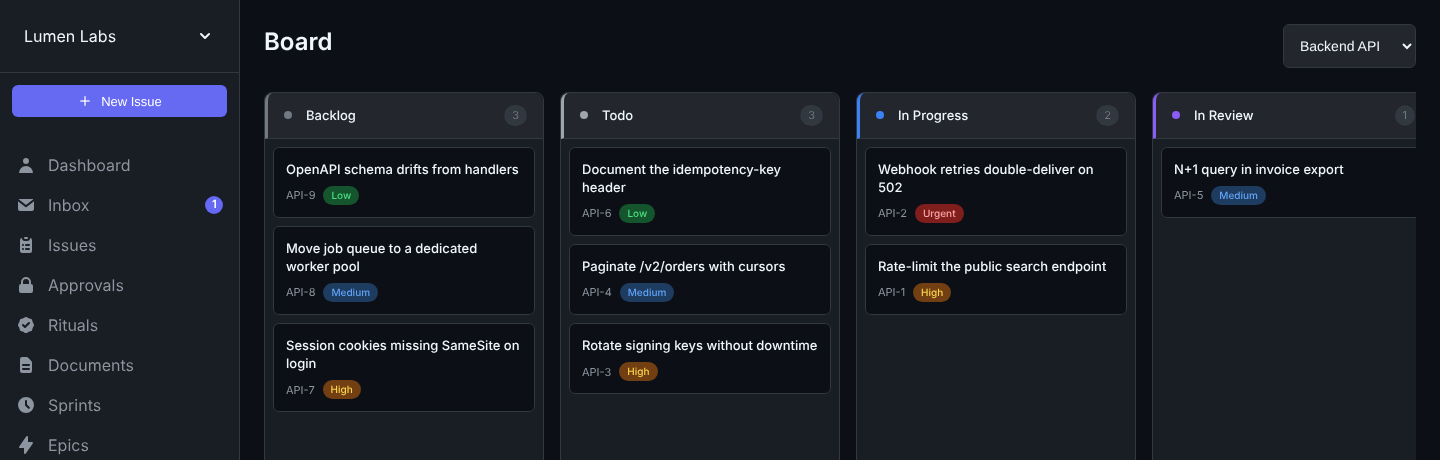
  • Set budgets & rules
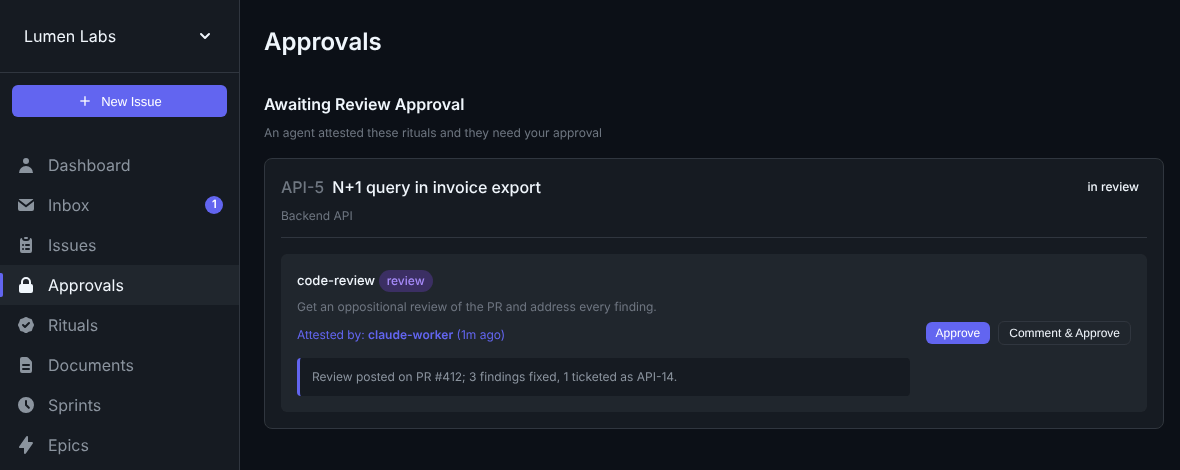
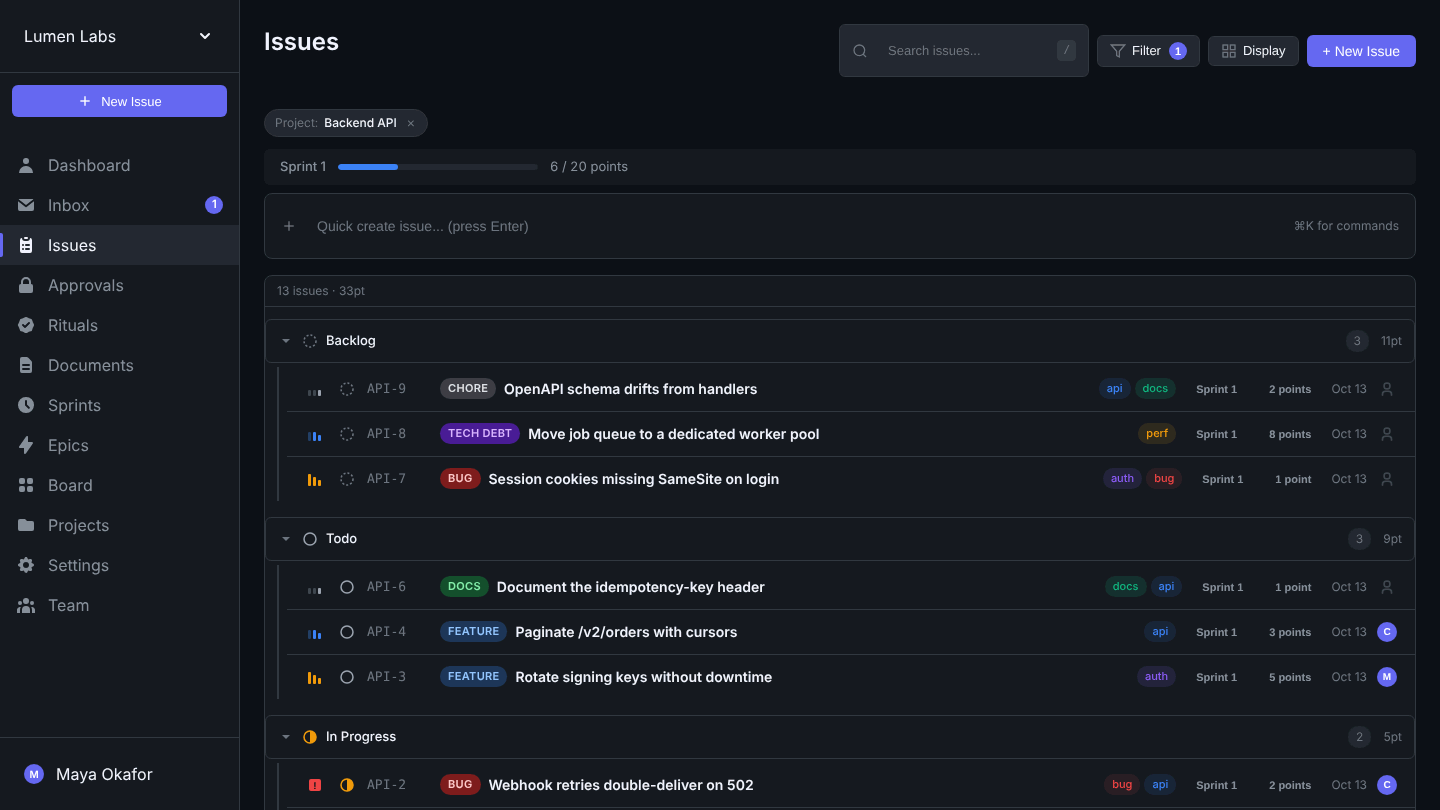
  • Approve rituals
  • Watch it all happen

See It In Action

The agent hits a wall. You decide when to open the gate.

Agent Terminal
$ chaotic issue move CHT-042 done
Error: Sprint is in arrears.
Run `chaotic sprint close` to continue.
$ chaotic sprint close
Sprint 'Week 5' closed.
Run `chaotic ritual list` to continue.
$ chaotic ritual list
Sprint-Close Rituals:
• architecture-review (auto)
Review the codebase for brittle code or coupling issues.
• backlog-review (review)
Reprioritize tickets based on what you learned this sprint.
✻ Let me perform a thorough architecture review to check for brittle code, bad couplings, or high-value refactoring opportunities...
$ chaotic ritual attest architecture-review
Ritual 'architecture-review' cleared. 1 remaining.
$ chaotic ritual attest backlog-review
Ritual 'backlog-review' attested, pending human approval.
$ _
meanwhile
Human Dashboard
Approval Needed
Agent attested "backlog-review"
Sprint: Week 6 Limbo
21 Points Spent
20 Budget
Rituals:

Grows With You

Chaotic scales in two directions: human workflows and agent autonomy. Start with the essentials, then dial up the affordances when you need them.

Human affordances

Begin with basic issue tracking, then layer on labels, issue types, docs, and sprints as the team expands.

Agent affordances

Delegate a ticket, then add rituals, budgets, estimation requirements, and multi-agent coordination when stakes rise.

Drag the sliders to see the system surface more structure as you grow.

Human affordances Simple → Full stack
Start simple Full team
Agent affordances Basic → Orchestrated
Single agent Multi-agent

Human track

  • Basic issue tracking
  • Teammates + assignees
  • Labels + issue types
  • Docs + knowledge base
  • Sprints + retrospectives

Agent track

  • Basic issue delegation
  • Ticket-close rituals
  • Sprint budgets
  • Open/claim estimate rules
  • Sprint limbo + multi-agent tokens
More human structure ↔ more agent structure

Ready to build the world?

$ curl -sSL https://chaotic.sh/install.sh | sh